at www.gojefferson.com/rascal
by John Foust
|
"Rascal" at www.gojefferson.com/rascal by John Foust |
 |
The Sterling North Home in nearby Edgerton, Wisconsin. It was restored by and is maintained by the Sterling North Society. The book "Rascal: A Memoir of a Better Era" was published in 1963. It is the autobiographical story of Sterling's adventures with adopting a baby raccoon at the turn of the century. The book won a Newbery Honor in 1964, the Young Reader's Choice Award in 1966, and the Sequoyah Book Award in 1966. It became a Disney movie in 1969. It became a cartoon series in Japan in 1977 and its popularity continues actively to this day. |
|
 |
The high chair that Rascal sat in, trying to eat a sugar cube... "Rascal" is still in print if you would like a copy. |
|
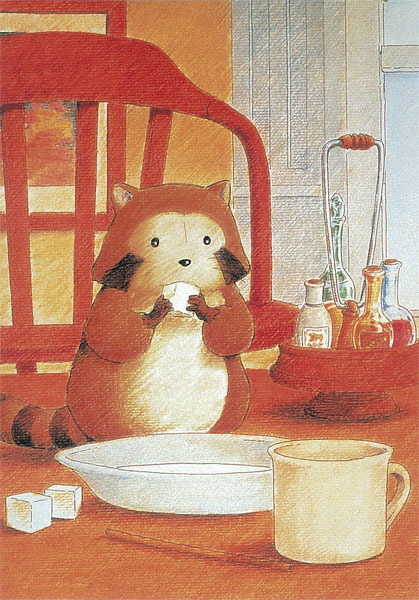 |
An art print of the same scene, a spin-off product of the cartoon series. Click on many images for a larger view. |
|
 |
The barn behind the house. They believe Rascal's entrance hole was at the lower right. The barn had been patched at that spot.
|
|
 |
The large oak tree next to the barn, where Rascal stayed. Sadly, the tree fell in a storm on October 27, 2010. |
|
 |
Inside the museum, a re-creation of the way that Sterling covered this bay window area of the living room with chicken wire to prevent Rascal from snatching the shiny ornaments on the Christmas tree. | |
 |
This picture shows where young Sterling scratched "Damn Kaiser Bill" on the side of the barn. He was referring to Kaiser Wilhelm II of Germany, often blamed for causing World War I. |
|
 |
The Methodist church tower in Edgerton where Poe the crow lived.
|
|
 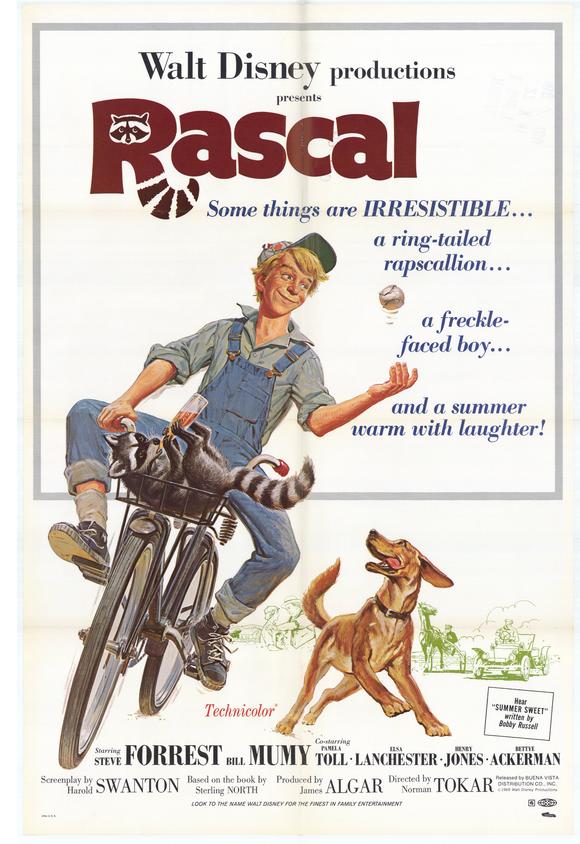 |
In 1969 Disney released "Rascal," a film adaptation of the Sterling North book. It starred Billy Mumy, better-known then and now as the young boy in the television series "Lost in Space." Although Sterling is 11 years old in the book, at the time of filming Mumy was 14. In two episodes in February 1973, "Rascal" played on national television in their series "The Wonderful World of Disney." Read a review of this version. Noted country-western songwriter Bobby Russell wrote the movie's theme song "Summer Sweet". |
|
 |
In 1977, Japanese television showed a year-long series of "Araiguma Rascal," a cartoon adaption of the book, created by Nippon Animation Company. The Sterling North Museum exhibits many examples of Japanese merchandise from the show. |
|
  |
Hayao Miyazaki was a lead animator on a number of the "Rascal" episodes (19 of 52, eps. 4-6, 10, 12-22, 24-28). He later created classic anime such as "Kiki's Delivery Service" and "Castle in the Sky" and many others. In Japan, his movies were more popular at the box office than "Star Wars". He's been called "The Walt Disney of Japan." In 2006, Time magazine voted Miyazaki as one of the most influential Asians in the past 60 years. |
|
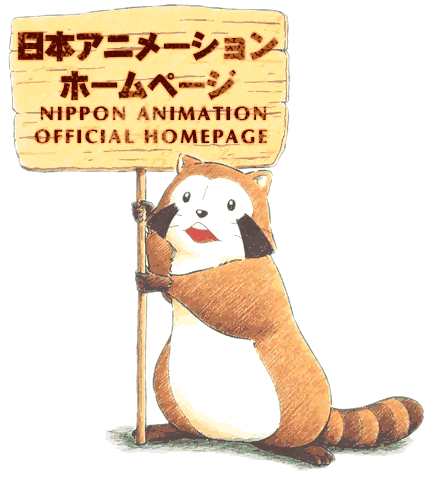 |
Rascal remains a popular character in Japan today, as seen by the mascot on the home page of the Nippon Animation Company. It's Rascal! |
|
 |
More Rascal merchandise, including candy, hand soap, dinnerware, books, fans, shampoo, dishcloths, a piggy bank and shopping bags. | |
 |
Yes, even Rascal toilet paper! | |
 |
The back porch area of the house, including the rear screen door leading towards the barn.
|
|
 |
Inside the barn, Sterling painted his initials in green paint. In the book, he describes using the same green paint on the canoe he built. | |
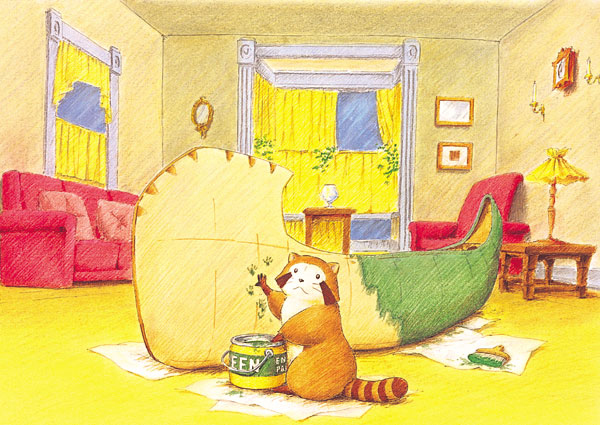 |
Rascal playing with paint on the canoe during its construction in the living room. | |
 |
The Rock River looking south, along the shore where North describes his favorite sand bar. There are still sand bars here, along with tree limbs not unlike the scenes in the book and cartoons. | |
 |
The old power plant at the Indianford Dam, looking northwest from the same spot as above. | |
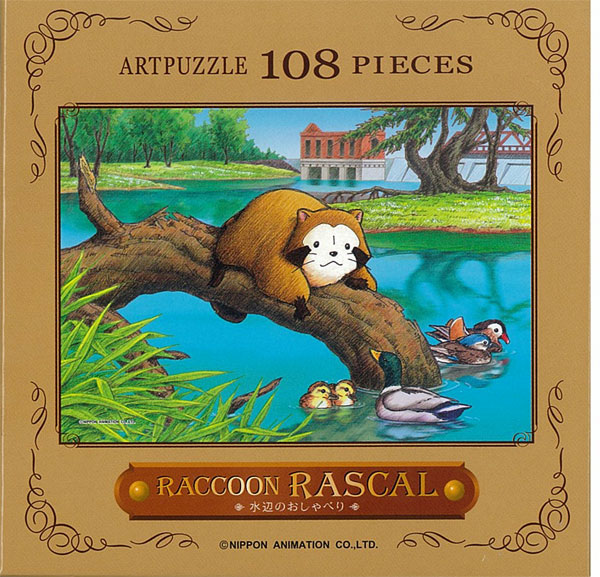 |
Rascal, ducks and the Indianford Dam as depicted on a Japanese puzzle featuring an image from the "Araiguma Rascal" series. Looks like a perfect match, no? That's because the Japanese animators visited Edgerton, Wisconsin to sketch scenes for the series, to make it as authentic as possible. According to Kazuo Nagata, a writer and editor for the 5.8-million circulation Yomiuri Shimbun newspaper, "Rascal" is bigger than Mickey Mouse in Japan. Amazing, if true! Here's a copy of a story Nagata-san wrote about his visit to Edgerton, translated to English. |
|
 |
Indianford Dam from the air in 1932, with the same power plant as above. Sterling's route from Edgerton to the river (as described in the book) curves north to the upper right, past his aunt's home where his canoe was later stored. The book's description of Sterling riding his bike out of town, past the cemetery, and down a long hill to the dam - all quite accurate. I think this road should be given the honorary name of "The Rascal Road." In the book and in the cartoon, Edgerton is called "Brailsford Junction." |
|
 |
"あらいぐまラスカル" or "A-ra-i gu-ma Ra-su-ka-ru" in Japanese hirigana and katakana. These words are written in two different styles of Japanese phonetic writing - araiguma is written as a native word, but "rasukaru" is written as four characters in the katakana style used for foreign words. |
|
 |
Here is Sterling's school. Today it is apartments, but looks the same. |
|
 |
Edgerton's train depot, train yard and adjacent tobacco warehouses are accurately represented. |
|
 |
||
|
Here is a panorama of downtown Edgerton today. The train depot now houses the Chamber of Commerce and a historical museum. Many of the tobacco warehouses are intact, even down to the old painted signs. Click for big version. |
||
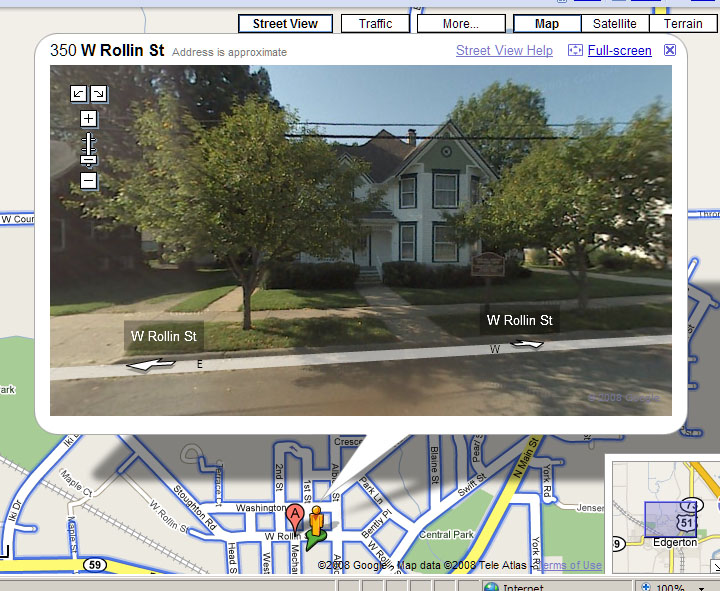 |
Parts of Edgerton are available on Google Maps Street View. To visit the Sterling North Society museum in Google Maps Street View, click here. One more click east and you can see the barn behind the house. You can't see the tree Rascal lived in, though. A few more clicks east, where you can take a right turn south down Albion Street. On your right is the Methodist Church. At about 66 Swift Street, one street over to the east, you can see Sterling's school on the east side of the street. You can even travel along the road on your virtual bicycle with Rascal in the basket, past the cemetery, and past his aunt's home, now abandoned. South of Edgerton in Indianford, you can visit the dam where Sterling would fish. |
|
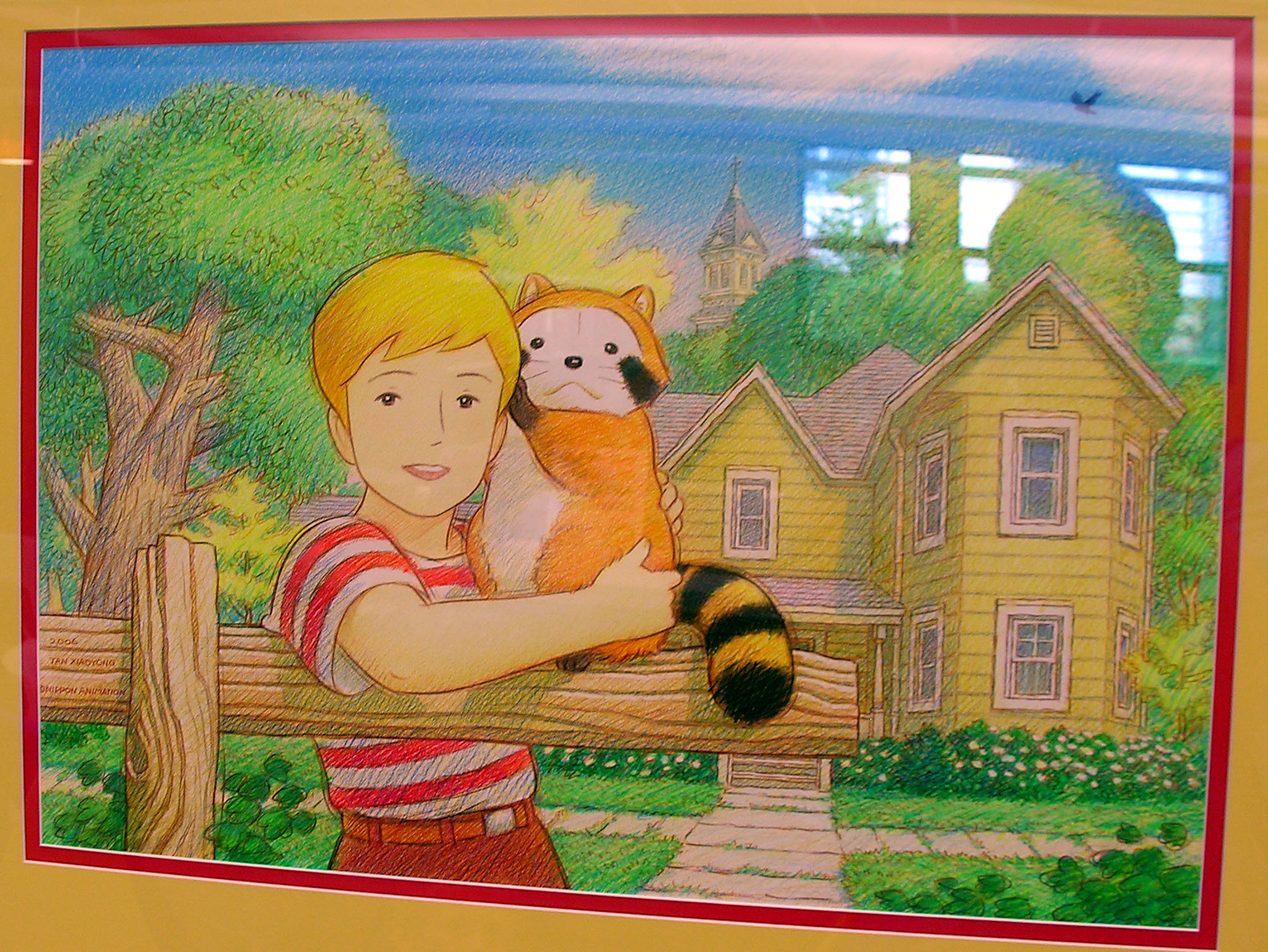 |
The children's library within the Edgerton Public Library features an original artwork donated by the Nippon Animation Company. Nearby, there is a letter from the president and CEO of Nippon Animation, celebrating the 2006 anniversary of North's birth. |
|
 |
The letter says: "March 11, 2006 - Dear People of Edgerton, We, at Nippon Animation, are very proud to celebrate the centennial of Sterling North's birth with you by donating the picture "Sterling and Rascal" inspired by our TV cartoon series "Rascal", to your new public library. It has been nearly 30 years since we produced the TV series "Rascal" in 1977, and the show has kept up its popularity among the Japanese people all those years. We hope "Rascal" will forever remain in the memory of the American people as well. |
|
|
To which I would add, with all due respect to both the Nippon Animation Company and Walt Disney, that it would be very nice if the people of America could purchase and view the animation series. However, we cannot. The children of Edgerton have never watched "Araiguma Rascal."
This is perhaps due to Disney's contractual prohibitions that do not allow anyone else to promote "Rascal" in the USA. Nippon Animation has not dubbed the series into English. They will not - or more properly, cannot - sell any Rascal items in the USA. I humbly ask both corporations to allow at least a sample of the episodes to be shown at the Museum so the the people of this area can learn how their heritage has enriched the lives of so many people throughout the world. |
||
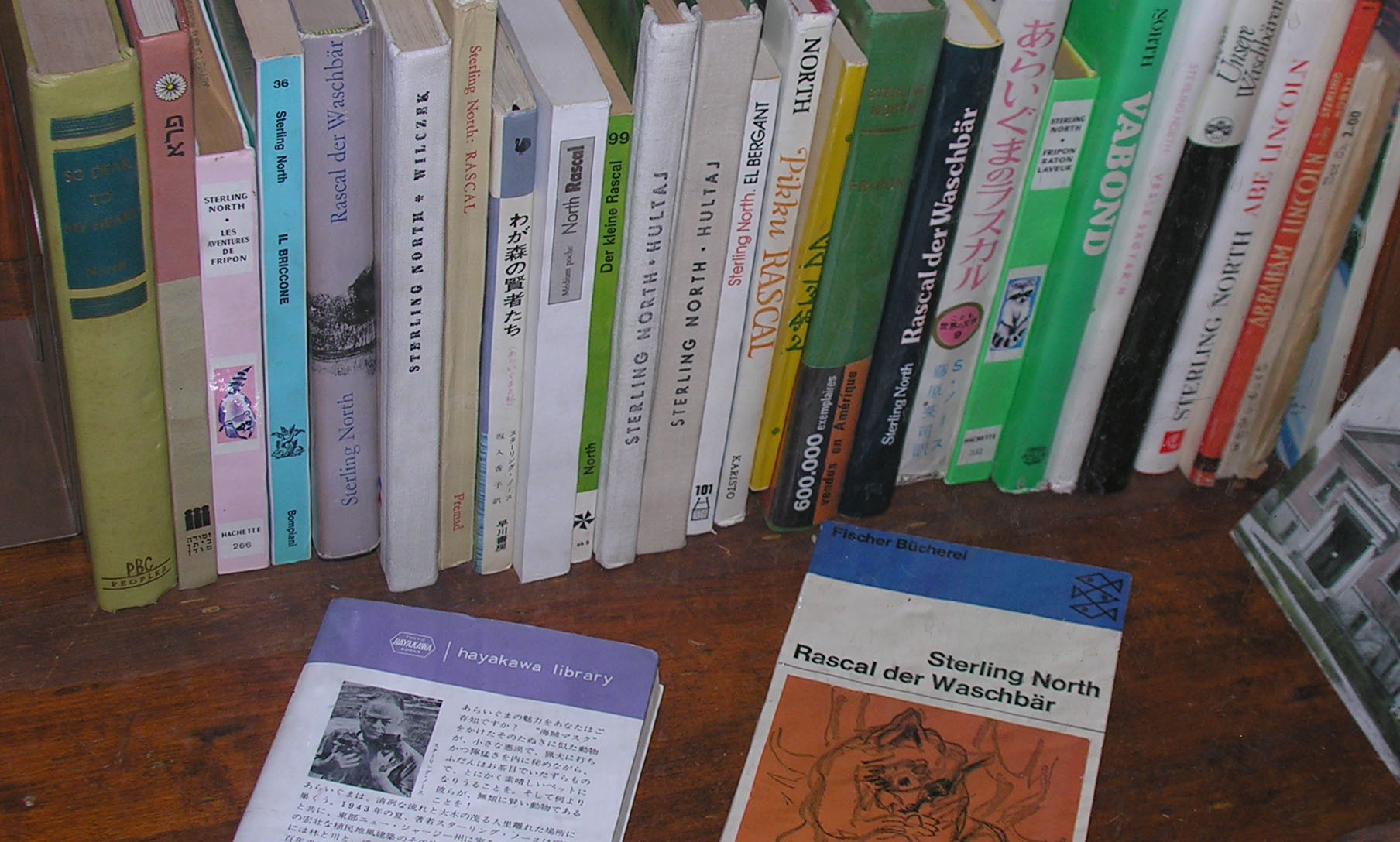 |
Upstairs in the adult area of the library, there is a collection of North's books as translated into many languages. |
|
 |
Araiguma means "wash bear", the same phrase used in many languages for "raccoon." In the German version, "Sterling" becomes "Robby" in the series. He's described as "a tender-hearted boy." |
|
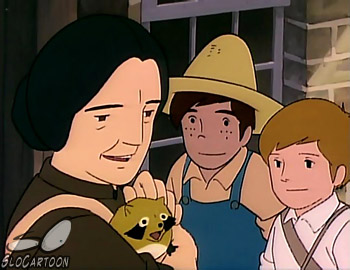 |
From an early episode of the series, when Rascal was small. Listen to MP3s of the opening and closing songs in Japanese. Or the opening song in German, Italian or Arabic (from Tunisia). Here are the lyrics in Japanese and Italian. The cartoon was also dubbed into Spanish and Tagalog, and sub-titled in Chinese, but it has not yet been dubbed into English! |
|
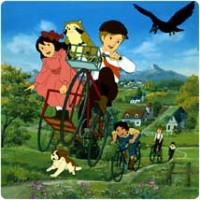 |
It was titled "الراكون راسكال" in Arabic. Click here to watch a movie of the opening sequence of the cartoon. Here's an episode guide with titles in Japanese and English, along with thumbnail pictures from each. The "Rascal" cartoon series was number one in its time slot, watched by 21.4% of Japanese homes on Sunday nights on the Fuji TV network. |
|
 |
The road leading out of town towards the river is still very rural, with the same wide-open spaces and farms that Sterling saw as he rode his bicycle. I'd like to see the road given the name "The Rascal Road." Note that there is no mountain in the background. Wisconsin is rather flat. |
|
|
|
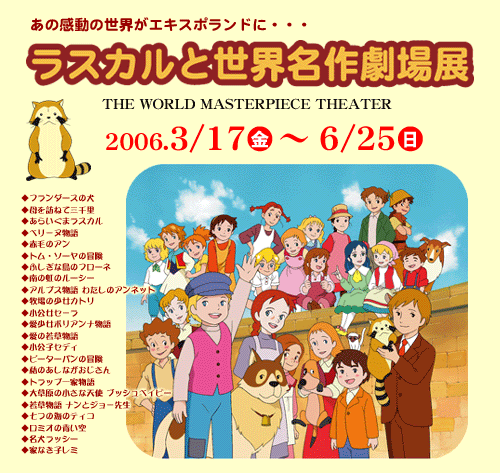
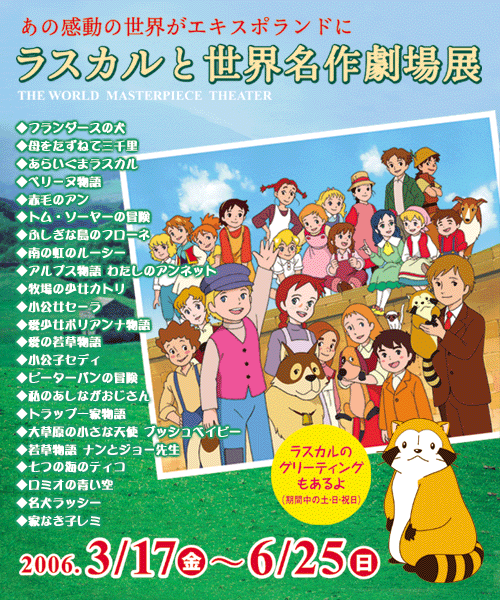
"Araiguma Rascal" was part of the "World Masterpiece Theater" series produced by Nippon Animation Company. The series has continued for more than twenty years, with series based on popular children's books. Each featured a new episode once a week for a year. Click here to see a list of all the "World Masterpiece Theater" animated series. In 1977, "Rascal" received the "Cultural Award for Children's Welfare" award from the Japanese Ministry for Health and Welfare. Other children's literature transformed to animation in the series include Anne of Green Gables, Heidi, and A Dog of Flanders. A World Animation Theater retrospective was a feature at Expoland, a popular Japanese amusement park, in the spring and summer of 2006. As you can see from the posters at left, Rascal was a prominent part of the exposition. In the summer of 2008, a Rascal retrospective exhibition was held at the Museum for Children of the World in Okazaki, Japan. One feature was Sterling North's canoe paddle, on loan from the Albion Academy historical museum. |
|
|
|
|
|
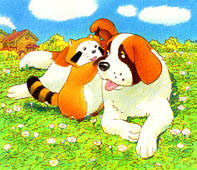 |
Rascal and Sterling's dog Wowser in the cartoon. In the cartoon, the location is sometimes referred to as Milwaukee, a city name that may have been more recognizable to Japanese because of an old Sapporo Beer Brewery advertising catchphrase "Munich, Sapporo, and Milwaukee." I write about Rascal and Japan at OnMilwaukee.com as well, titled "Japanese know Milwaukee not for beer, but a raccoon?" |
|
 |
Do you notice something "wrong" with the cartoon Rascal? This picture shows a North American raccoon. The Japanese animators stylized the raccoon's face so that the black bar of the raccoon's "mask" doesn't extend to cover the eyes. This allows Rascal's animated eyes, nose and mouth to be more expressive, as drawn as black on white. |
|
 |
Is this a raccoon? No, it's the Asian red panda, Ailurus fulgens. Perhaps the animators used this creature as a guide. |
|
  |
Is this a raccoon? No, it's the tanuki, a Japanese creature in the dog family that looks a bit like a raccoon. Read more about tanuki at Wikipedia. It says "Statues of tanuki can be found outside many Japanese temples and restaurants, especially noodle shops. These statues often wear big, cone-shaped hats and carry bottles of sake in one hand, and a "promissory note" (a bill it never pays) or empty purse in the other hand." They are symbols of good luck. |
|
|
|
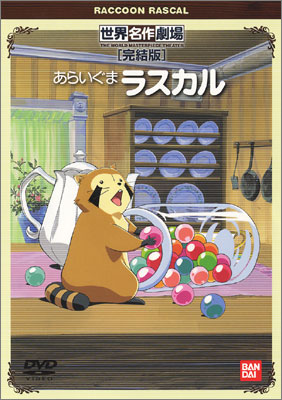
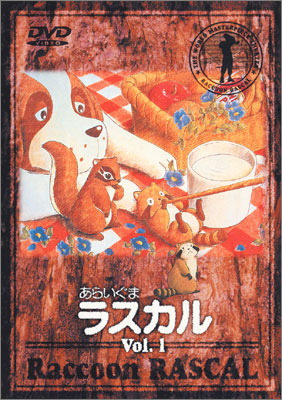
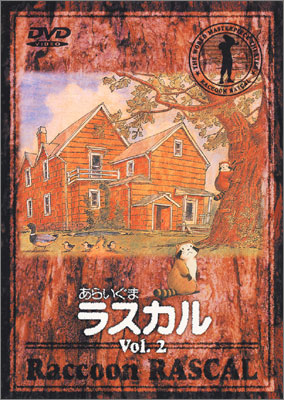
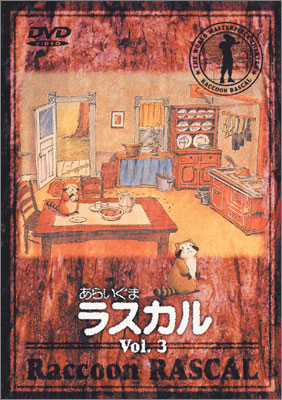
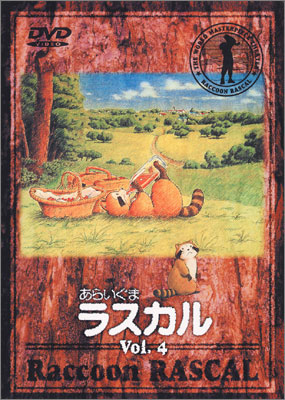
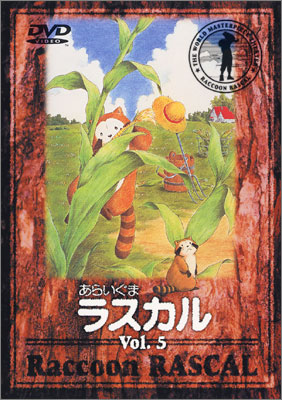
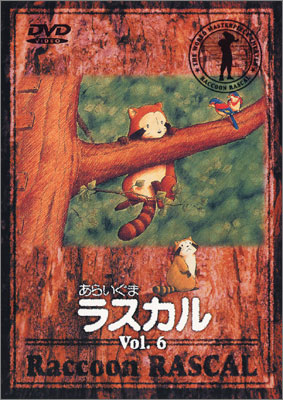
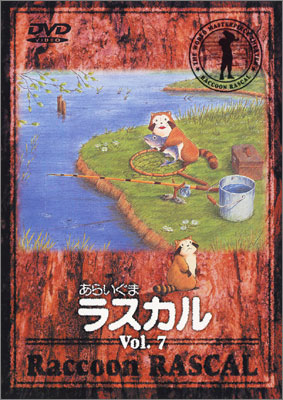
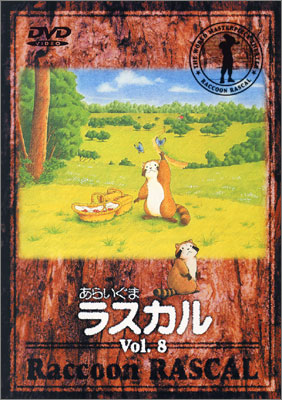
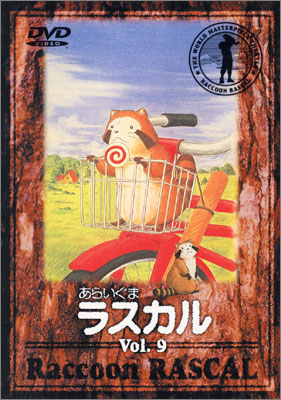
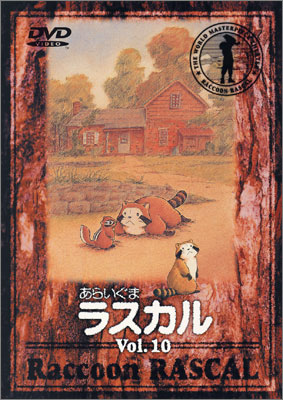
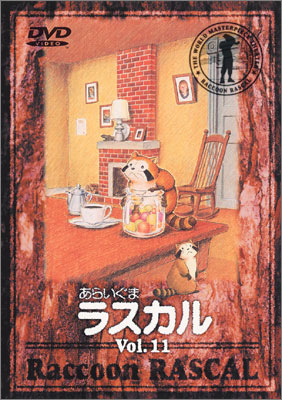
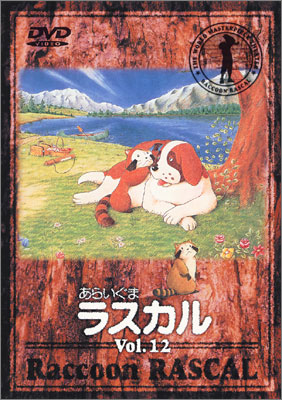
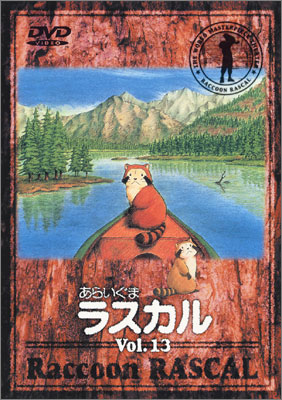
Bandai Visual, producers of the fourteen DVD series released in 2001, has another extensive Rascal page. Each DVD is about $35 retail. Click on each thumbnail for a larger version. Images Copyright 1977 Nippon Animation Co., copyright 2001 Bandai Visual Co. Ltd. All rights reserved. |
|
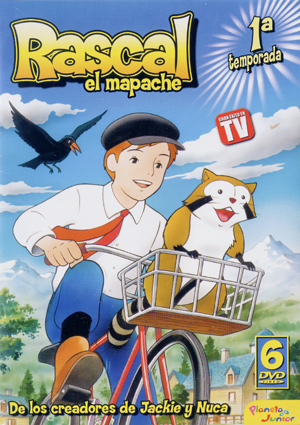  |
"Rascal, el Mapache" DVDs in Spain. From the clips I've seen, the Spanish version was created from the German version - it has the German titles and theme song. In Russian, it's called "Енот по имени Раскал". |
|
 |
In German, "Rascal, der Waschbär" was shown from 1995 to 2003. Here is the episode guide in German. If you'd like to get a better idea of what's in each episode, read the German to English version, as translated roughly by computer. |
|
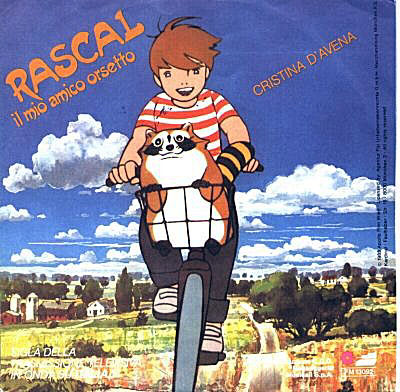 |
In Italy, the series was called "Rascal, il mio amico orsetto" and broadcast in 1985. In Italian, a raccoon is also called "l'orsetto lavatore" - again, "washing bear." This is the cover of the Italian record of the opening theme song. Here are the lyrics in Italian. |
|
 |
The "Rascal" cartoon theme song was one of the tunes that played in first stage music for the "Frogger" video game on many platforms in the early 1980s. Click here to listen to an excerpt. |
|
 |
Rascal-mania continued in Japan into the 1990s with Nintendo video games. This image is from the Super Nintendo (SNES) version of "Araiguma Rascal." Click here to watch a movie of a few sequences from the game. |
|
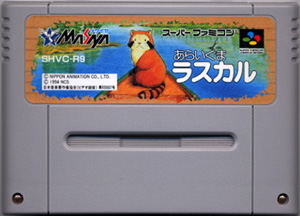 |
From 1994, this is the Super Famicom cartridge for a console video game system popular in Japan. |
|
 |
This is the box from the Nintendo Game Boy Color version of "Oide Rascal." "Oide" is Japanese for "come here", as used in the beginning of the theme song. Properly pronounced "Oy-day" or better yet "OH-ee-day", the English-singing boy makes it sound like "Heidi, Heidi Rascal" in English version of the opening song, or "Hidee" as in "Hidee Ho". |
|
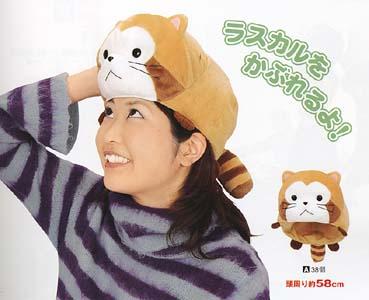 |
A super-cute Rascal hat. The Nippon Animation Company has an online presence for Rascal at araiguma-rascal.com as well as a Twitter feed @Rascal_tweet. The Nagasaki Eighteenth Bank has cash cards and checkbooks with a Rascal theme. |
|
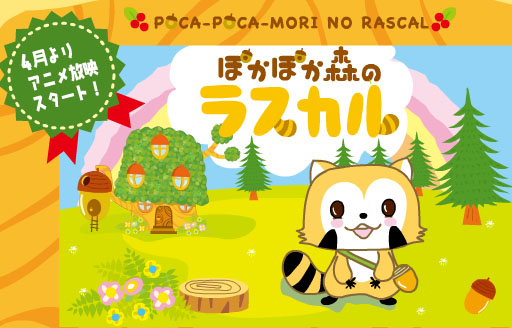 |
In 2005, Nippon Animation released a spin-off series called "Poka Poka Mori no Rascal." Considerably cute-ified in true Japanese style, the new series seems to have little to do with "Rascal" other than leveraging the popular association between the name "Rascal" and cute anthropomorphic raccoons. |
|
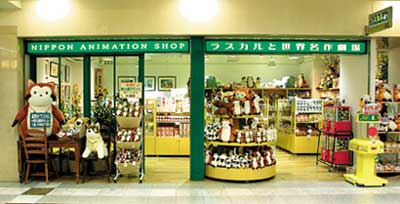 |
The Toyko Train Station once had a Rascal store. On the left it says "Nippon Animation Shop". On the right, "Ra-su-ka-ru" are the first four characters. |
|
  |
There is a series of small puzzles with scenes inspired by the cartoon. Jump to a page showing them all. |
|
| There are quite a few Rascal-theme videos on YouTube Japan... a live performance of the theme song in a packed stadium at an anime-themed event... scenes in a Rascal store... more... more... another kid's show... Rascal mascot at a Tokyo toy show... A live-action performance at a Takanawa hotel... Rascal practicing the violin... The theme song on saxophone... a stylized version of the intro... | ||
|
|
Rascal wallpapers for your phone. |
|
 |
Rascal coloring pages - one, two, three, four. | |
 |
"Hello! Morning" was a popular Japanese TV program featuring the musical group "Morning Musume". (Cross the rotating member concept of "Menudo" with a sticky-sweet Japanese teen girl group, and add a little Mouseketeers.) On March 11, 2007, the show featured a contest with the guest Masako Nozawa, an anime voice artist who also voiced Goku, Gohan and Goten from the Dragonball Z cartoon series. Morning Musume members Yossi, Sayu and Yui had to voice Sterling, Rascal and the lady raccoon in the concluding scene where Rascal returns to the wild. |
|
 |
The Wisconsin State Historical Society has paper dolls of Sterling North in typical boy's clothes from 1918. | |
 |
To celebrate the 30th anniversary of Rascal in 2007, Sekai TV and Nippon Animation sponsored a contest with a grand prize of a trip for two to Edgerton to visit the Sterling North Museum. Rascal and friends are shown here, pulling the winning ticket. (I recognize Tadashi Izumi and I believe the distinguished gentleman is Nippon Animation president Koichi Motohashi or his representative.) |
|
 |
In late 2007, Nippon Animation celebrated the of "Rascal" with a sweepstakes contest. The grand prize was a trip for two to Edgerton to visit the Sterling North home and other sites. A tour group of a dozen Japanese visited Edgerton in June 2008. Here are the winners, Senae Hatta and her daughter Mayu. They are joined by television star Tadashi Izumi and myself. Izumi-san serenaded the event with his English translation of the Rascal theme song, from his book "English - Let's Play with Rascal". |
|
 |
Here Tomohiko Takei, chief of licensing for Nippon Animation, presents Sterling North's daughter Arielle Olson with a limited edition animation cel of Sterling and Rascal drinking strawberry soda, as well as a gift bag of many other Rascal items. The Janesville Gazette covered the event in a story titled "Japanese tourists are wild about Rascal". |
|
 |
Arielle Olson presents Senae and Mayu with copies of two books by her father as well as one book of her own. Later, the Sterling North Society presented Mayu with a first edition of North's "Midnight and Jeremiah" and a book plate signed by Sterling North. Stories from this book were the basis of the Disney movie "So Dear To My Heart". |
|
 |
Other guests included representatives from other licensing companies such as Ryoko Noda from Sekiguchi, shown here with a Christmas Rascal she designed as part of their product line for Sekai TV. She signed and presented it to a member of the Sterling North Society. Other representatives from Banpresto and Bandai Visual attended as well. |
|
 |
Rascal super-fan Mayumi Kondo (with her ever-present Rascal) learns about the true origins and details of the "Oscar" character from Mark Scarborough, a member of the Sterling North Society, aided by the group's interpreter. | |
|
Rascal as environmental threat in Japan Rascal's popularity led to many Japanese children requesting raccoons as pets. Unfortunately, North American raccoons are now a serious alien pest in Japan. Like Rascal's destruction of neighborhood sweet corn in the book, Rascal's descendants are wreaking havoc on vegetables and buildings in Japan. According to a May 2006 news item in the Kyodo News, "a central prefecture of Japan plans to exterminate all 4,000 raccoons thought to be living in the region to avoid damage to agriculture. Kanagawa prefecture, to the south of Tokyo, would carry out the plan in five years. The plan is thought to be in line with the Japanese law that prevents damage from alien species. Similar plans have been approved by Japan's environment ministry. The number of raccoons caught in the prefecture surged from four to some 1,000 from fiscal year 1995 to fiscal year 2005, local officials said, most of the mammals have become wild after being kept as pets. The animals have caused an estimated damage of over 15 million yen (about 133,900 U.S. dollars) to agricultural produce and others in fiscal 2005, officials said. Some local residents and experts have voiced opposition to the trapping and killing of raccoons which the plan called for, in terms of animal protection and its questionable effect." Raccoons can carry rabies, so health officials are naturally concerned. A similar story emerges from a September 2004 article (link broken) in the Japan Times, titled "Raccoons -- new foreign menace?". It says "Raccoons were strangers to Japan until around 1977, when a television cartoon about an American boy befriending one of the cute little carnivores led to the animals being imported as pets. But the relationship since 'Raccoon Rascal' aired in Japan has soured. Owners, fed up with trying to tame the wild species to be cute little critters like the one in the cartoon, dumped them in the wild -- where, lacking a natural predator -- they have proliferated and are now perceived as pests, occasionally damaging crops and bothering people." From a Japanese veterinarian, (link broken) a story titled "The Revenge of Raccoons may Signal an End to 49 Years of a Rabies-Free Japan", it says "In 1977, a Japanese television network broadcast a cartoon for children, Raccoon Rascal, which was based on an American novel by Sterling North published in 1963, Rascal: a Memoir of a Better Era. The 52 episodes of the cartoon had a huge commercial success at the time and raccoons became one of the most popular animals among children and their parents all over the country. |
||
|
Watch Raccoon Nation on PBS. See more from Nature. |
"Raccoon Nation" premiered on PBS in February 2012. Rascal's connection to the damage in Japan appears at 24:00 and lasts for about two minutes. Part of the problem, it explains, was the way that Sterling released Rascal into the forest when he grew unfriendly to humans. Pet owners did the same thing. |
|
 |
Nippon Animation has several other Rascal promotional videos on their YouTube channel. |
|
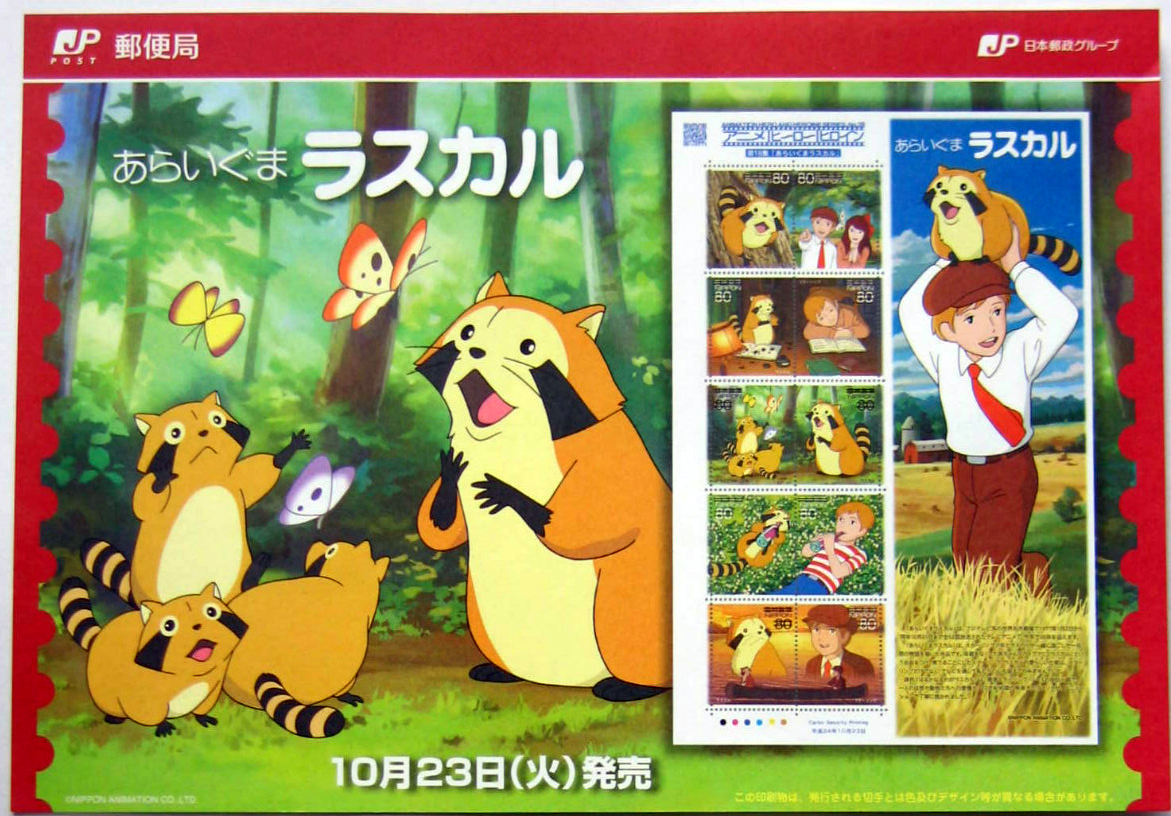 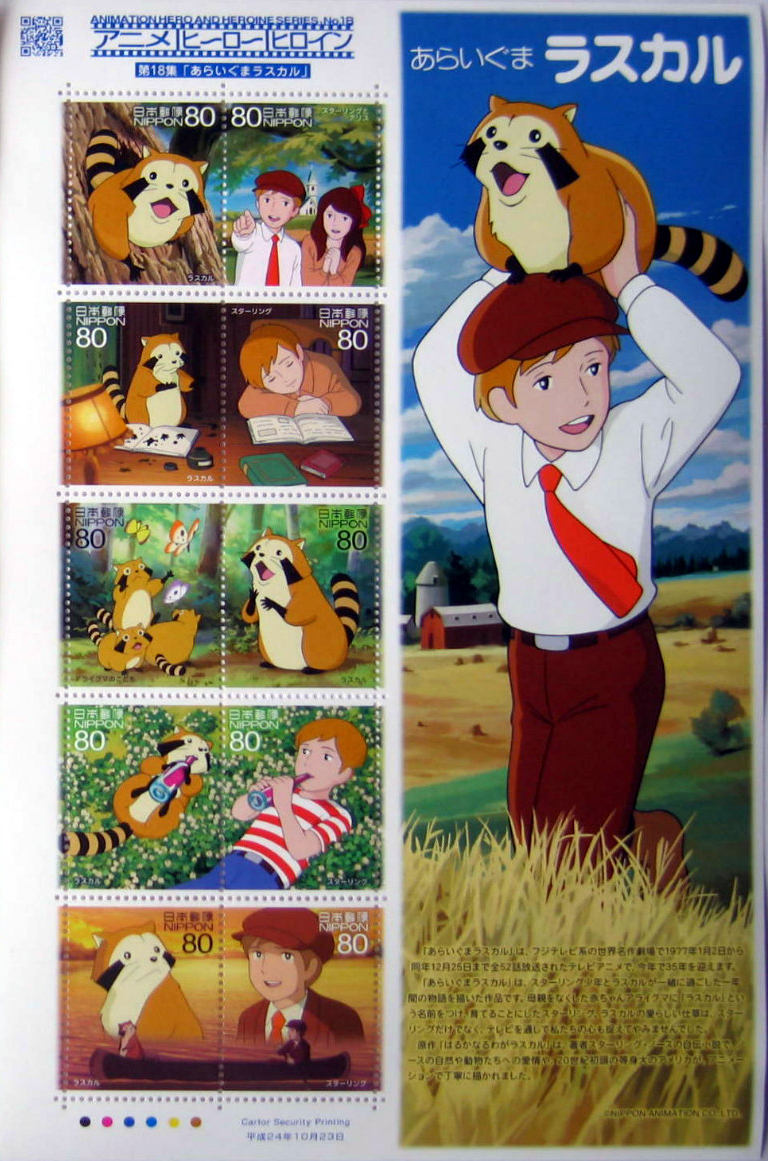 |
In October 2012, the Japanese post office issued a series of Rascal stamps. | |
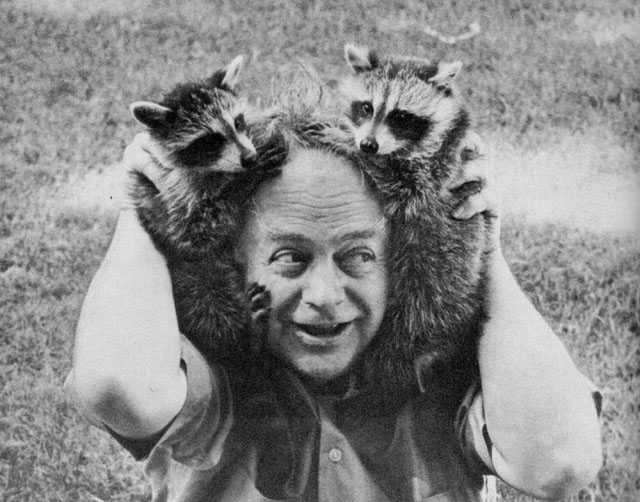 |
Sterling North as an adult, with two raccoons. | |
 |
"Mischievous Raccoon Wreaks Havoc On International Space Station" A recent Onion parody news article about a raccoon that stows aboard the International Space Station, including a reference to Rascal. |
|
|
About |
||
 |
Why did I make this web? I find it fascinating that such a simple, local story became not only a national bestseller but also exploded into an even larger, enduring phenomena in another country and throughout the world. Yet Rascal's international popularity is not on the radar around here... I don't think even the most loyal fans of "Rascal" in the United States knew about his popularity in Japan. If you have a Rascal story, please send me a note. - |
|
| goJefferson.com and threedee.com 235 South Main St. Jefferson, WI 53549 (920) 674-5200 |
||